
Cappadocia: Hot Air Balloons, Underground Cities and the Valleys of Central Anatolia
Cappadocia is one of Türkiye’s most distinctive travel destinations, where volcanic landscapes, centuries-old settlements and remarkable geological formations create scenery unlike anywhere else in the world. Situated in the heart of Central Anatolia, the region extends across Nevşehir, Kayseri, Aksaray and Niğde provinces, attracting millions of visitors every year. While colourful hot air balloons have become its modern symbol, Cappadocia offers far more than sunrise flights. Ancient underground cities, cave churches decorated with Byzantine frescoes, traditional villages and dramatic valleys provide opportunities to discover thousands of years of human history alongside exceptional natural beauty.
Why Cappadocia Is Unlike Any Other Destination in Türkiye
The landscape seen across Cappadocia today began forming millions of years ago when eruptions from Mount Erciyes, Mount Hasan and Mount Güllü Dağ covered the region with layers of volcanic ash. Over time this material hardened into soft tuff rock, which was gradually sculpted by wind, rain and seasonal temperature changes. The result is an extraordinary collection of fairy chimneys, cliffs, natural towers and rock formations that continue to evolve today.
Human communities quickly recognised the advantages of this soft volcanic stone. Instead of relying solely on traditional construction methods, generations of residents carved homes, churches, monasteries, storage rooms and even entire villages directly into the cliffs. Many of these structures remain in use, while others have become museums or carefully preserved historical sites that reveal how daily life developed over many centuries.
Although photographs of balloon-filled skies dominate travel brochures, the region rewards visitors who spend several days exploring beyond the main viewpoints. Walking through quiet valleys, visiting local pottery workshops in Avanos, tasting regional Anatolian cuisine and staying inside restored cave hotels provide a much broader understanding of Cappadocia’s cultural identity than a single morning excursion.
The Best Time to Visit Cappadocia
Spring and autumn are generally considered the most comfortable seasons for travelling throughout Cappadocia. Between April and June, temperatures are pleasant for hiking while many valleys display colourful wildflowers. September and October usually offer clear skies, comfortable daytime conditions and stable weather that often favours balloon operations.
Summer brings long daylight hours and reliable access to attractions, although afternoon temperatures frequently exceed 30°C, particularly during July and August. Travellers planning extensive walks should begin early in the morning, carry sufficient water and schedule indoor visits during the hottest part of the day.
Winter transforms Cappadocia into an entirely different landscape. Snow covering the fairy chimneys and volcanic hills creates striking scenery rarely seen in postcards. Flights continue whenever weather conditions allow, while lower visitor numbers make museums, valleys and historic villages considerably quieter than during the busiest months.
Underground Cities and Ancient Settlements Beneath the Surface
One of Cappadocia’s greatest historical achievements lies below ground. The region contains dozens of underground cities carved into volcanic rock, many of which were gradually expanded between the Hittite period and the Byzantine era. These subterranean complexes provided protection during periods of invasion while allowing entire communities to survive underground for extended periods.
Derinkuyu is the largest underground city currently open to visitors. Descending several levels below the surface reveals narrow corridors, kitchens, ventilation shafts, churches, storage chambers and communal areas connected by an impressive engineering system. Archaeologists believe the complete settlement extends much deeper than the sections currently accessible to the public.
Kaymaklı offers a different perspective on underground life. Although slightly smaller than Derinkuyu, its wider passageways make it easier to appreciate how families organised everyday activities. Storage rooms for food, wine production areas and livestock shelters demonstrate that these cities functioned as complete communities rather than temporary hiding places.
The Valleys That Define Cappadocia
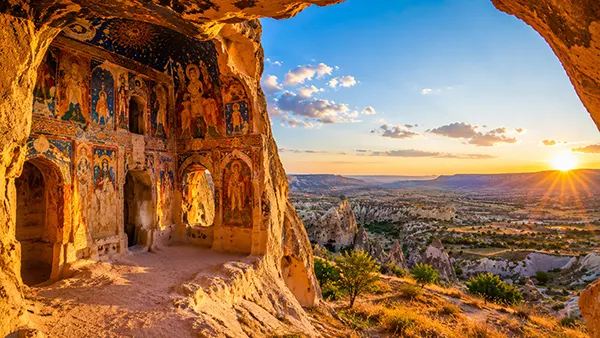
Göreme National Park forms the heart of the region and is recognised as a UNESCO World Heritage Site. Within its boundaries lie several of Cappadocia’s best-known walking routes, where volcanic formations stand beside rock-cut churches containing frescoes dating from the 10th and 11th centuries. The Göreme Open Air Museum remains one of Türkiye’s most significant historical attractions.
Rose Valley and Red Valley attract walkers throughout the day thanks to their changing colours. As sunlight shifts across the volcanic rock, the cliffs display shades of pink, orange and deep red that become particularly striking shortly before sunset. Well-marked paths connect viewpoints, vineyards and centuries-old cave chapels hidden among the hills.
Love Valley, Pigeon Valley and Ihlara Valley each offer a completely different landscape. Love Valley is known for its unusually shaped rock pillars, Pigeon Valley reflects the historical importance of pigeon houses carved into the cliffs, while Ihlara Valley follows the Melendiz River through a green canyon lined with ancient churches and shaded walking trails.
Hot Air Balloon Flights and Authentic Experiences Across Cappadocia
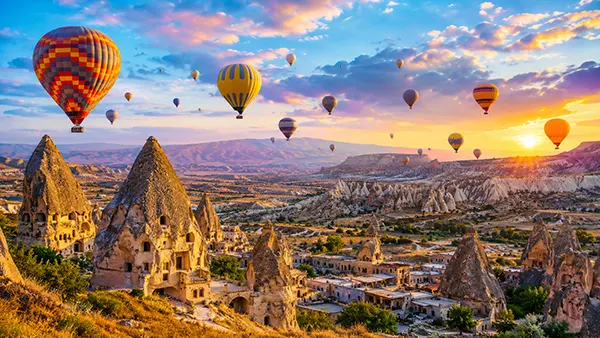
Hot air balloon flights have become Cappadocia’s defining attraction, with departures taking place shortly before sunrise whenever weather conditions are suitable. Civil aviation authorities monitor wind speed, visibility and atmospheric stability before granting daily permission for flights. Safety remains the deciding factor, and even during the busiest travel months departures may be postponed or cancelled if conditions are considered unsuitable.
The experience begins before dawn, when passengers are collected from their accommodation and taken to the launch sites. As the balloons inflate, the first light of day gradually reveals the surrounding valleys and volcanic formations. Once airborne, the balloons rise slowly before drifting across Göreme, Love Valley, Red Valley or neighbouring landscapes, depending on wind direction. Most standard flights last between 45 and 75 minutes, although longer premium options are also available through licensed operators.
Travellers who choose not to fly can still enjoy the spectacle from several panoramic viewpoints. Sunrise observation points around Göreme, Uçhisar and Ortahisar provide excellent opportunities to watch dozens or even hundreds of balloons filling the sky. Photographers often arrive well before sunrise to secure the best positions, particularly during spring and autumn when balloon activity is at its highest.
Historic Villages, Local Traditions and Practical Travel Advice
Several historic settlements deserve as much attention as the famous valleys. Göreme serves as the region’s main tourist centre, offering convenient access to museums, restaurants and hiking routes. Uçhisar is dominated by its enormous natural rock fortress, which provides one of the highest panoramic viewpoints in Cappadocia. Ortahisar retains a quieter atmosphere, where traditional stone houses and narrow streets reflect everyday life beyond the busiest visitor areas.
Avanos, situated along the banks of the Kızılırmak River, has been associated with pottery production for thousands of years. Local workshops continue to use red clay collected from the river, following techniques that have been passed through generations. Visitors can observe skilled artisans shaping ceramics by hand and, in many workshops, try traditional pottery-making under expert guidance.
To make the most of a visit, travellers should plan at least three full days in the region. Comfortable walking shoes are essential, as many attractions involve uneven volcanic terrain and stone pathways. Early booking is strongly recommended for balloon flights, particularly between April and October, while museum passes can help reduce waiting times at major historical sites. Combining archaeological landmarks, scenic walks, regional cuisine and village visits provides a balanced introduction to one of Türkiye’s most distinctive cultural landscapes.