
Valencia on a Budget: How to Mix the Old Town, the Sea and Futuristic Architecture Without Overspending
Valencia is one of those rare cities where you can spend the morning among medieval streets, eat a proper paella by the sea, and finish the day surrounded by futuristic buildings that look like a film set. The best part is that it’s entirely possible to do this without blowing your budget—if you plan your transport, choose the right areas to eat, and time your visits to the big-ticket attractions. The city is compact, walkable, and well connected by metro, tram and buses, which means you can keep costs predictable and still see a lot in just two days.
How to Get Around Valencia Cheaply (So You Don’t Waste Money on Taxis)
The easiest way to keep spending under control is to rely on Valencia’s public transport and walking. Most central sights—such as the Cathedral area, the Central Market and the Turia Gardens—are close enough to cover on foot. When you need transport, the city uses an integrated ticket system for metro, tram and EMT buses, which makes budgeting simple. Since fares can change, it’s sensible to check the current official Metrovalencia fare page before you travel, especially if you arrive through the airport zone.
For most visitors staying in the city, Zone A is the key. A practical option for short visits is a 10-journey pass such as SUMA 10, which can help you avoid paying repeatedly for single tickets. If you’re staying in walkable areas like Ciutat Vella, Ruzafa, or near the Turia Gardens, you may find that a small pass lasts longer because so much is reachable on foot.
If you’re arriving at Valencia Airport (VLC), plan your ticket with the airport zone included rather than buying separate journeys. The airport is connected by metro lines into the city, and having the right zone coverage from the start helps keep your first day costs predictable.
Smart Money-Saving Transport Habits That Actually Work
Stay in a walkable district. Accommodation in or near the historic centre, Ruzafa, or the Turia Gardens reduces transport costs because you naturally walk more. Valencia is mostly flat, so walking feels easy rather than exhausting.
Use tram and metro for long jumps. Save public transport for the bigger moves: Old Town to the City of Arts and Sciences, or the centre to Malvarrosa and Patacona. This is usually cheaper than short taxi rides that add up fast.
Don’t over-buy tickets. Many travellers waste money by purchasing more journeys than they actually use. For a two-day stay with a tight plan, combining walking with a small journey pass is often enough. If you stay longer, count your likely journeys first and then choose the most cost-effective option.
City of Arts and Sciences: A Realistic Route (Without Paying for Everything)
The City of Arts and Sciences (Ciutat de les Arts i les Ciències) is Valencia’s signature “future city” area, and it’s also where budgets often go off track. The complex is massive, and a lot of its impact is free: the bridges, the shapes, the water reflections, and the walkways between buildings. If you treat the architecture itself as an experience, you can enjoy the atmosphere without buying entry to every venue.
The main paid attractions inside the complex include the Oceanogràfic (aquarium), the Science Museum, and the Hemisfèric. Costs vary depending on what you choose, and combined tickets can be more economical if you already know you want more than one attraction. The key is not to decide on the spot, because spontaneous purchases are usually where overspending begins.
If you only have time or budget for one indoor venue, Oceanogràfic is typically the longest visit. It can take a large part of your day, which means it should be planned like a “main activity” rather than something you squeeze in between other stops.
A Walkable Mini-Itinerary Inside the Complex (So You Don’t Burn Out)
Start with the free architecture loop (45–60 minutes). Walk the outer paths first, take photos, and absorb the layout. This helps you decide what is worth paying for, rather than committing blindly.
Pick one paid highlight per half-day. Instead of trying to “complete” the complex, choose a balanced approach: Oceanogràfic as a main event, then a shorter visit later (Science Museum or Hemisfèric) only if it fits your time and budget.
Use the Turia Gardens as your recovery route. From the complex you can move into Jardín del Turia, one of Valencia’s best free experiences. It’s a long green park built in a former riverbed, ideal for slowing down after crowds and paid attractions.
Sea, Beaches and Neighbourhoods for Long Walks (The Best Free Valencia)
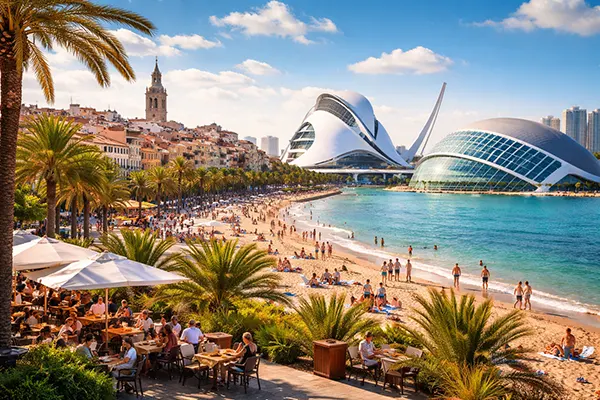
Valencia’s seaside is not just one beach—it’s a chain of different moods. Malvarrosa is the classic wide urban beach; Patacona feels calmer; and El Cabanyal adds character with its colourful streets and local energy. If you focus only on the sand, you miss the bigger value: the walks, the promenade atmosphere, and the sense of a real coastal city.
To keep your trip affordable, treat the beach day as a full plan rather than an add-on. A simple route is: morning walk in El Cabanyal, lunch by the sea, long afternoon promenade, and sunset at the waterfront. Your costs become predictable (transport and food), and you avoid paying for extra attractions just because you feel you should “do more”.
If you want a quieter alternative that still feels open and refreshing, combine the beach area with Valencia’s parks. The city’s layout makes it easy to go from the centre to green space to the sea without complicated logistics.
Where to Eat Paella Without Tourist Overpricing
Know what “traditional” means. Authentic Valencian paella is usually made with chicken, rabbit, green beans and garrofó beans. Many beachfront places serve rice dishes aimed at tourists, so reading menus carefully matters more than choosing the place with the best sea view.
Use reputation, not location, as your filter. Some well-known rice restaurants are located near the beach, but the point is to avoid places that rely only on foot traffic. A restaurant that specialises in rice dishes and has consistent local reputation is a safer bet than a generic menu with ten different “paellas”.
Consider El Cabanyal for better value. This neighbourhood often feels less “tourist-priced” than the most obvious promenade strip. You can still eat close to the sea, but with a better chance of finding good quality for a fairer price.