

Finland in Winter: Saunas, the Northern Lights and Gaming Venues in Lapland
Winter in Finland offers a distinctive mix of Arctic nature, deep-rooted traditions and modern leisure that attracts travellers seeking a clear picture of what the far north is like in the coldest season. The Lapland region becomes the centre of attention thanks to its snowy landscapes, long nights and well-organised winter services. From traditional heat rituals to the remarkable visibility of the aurora borealis and regulated gaming venues that operate across the region, winter presents a realistic snapshot of Finnish culture and recreation.
The Cultural Foundation of Finnish Saunas
Saunas play a central part in Finnish life, especially during the winter season when temperatures in Lapland often fall to −25°C or lower. The region maintains both public and lodge-based saunas, many of which follow long-standing local traditions. In towns such as Rovaniemi and Levi, visitors can encounter wood-heated facilities that preserve genuine craftsmanship and highlight how communities have adapted to severe winter conditions over generations.
Many saunas in Lapland are situated near rivers or lakes that freeze during the winter months. This encourages the widely practised contrast between intense heat and a brief dip in icy water through prepared openings in the ice. The process, although rooted in everyday routine for locals, is carefully monitored to ensure safe conditions for visitors. Winter tourism centres provide clear safety instructions, making the experience accessible even to those unfamiliar with Arctic weather.
Another feature of Finnish sauna culture is the availability of smoke saunas in selected areas of Lapland. These saunas, heated by burning wood without a chimney, require several hours of preparation and attentive supervision. Although they are not as common as modern types, certain rural lodges and family-owned establishments continue to maintain them, preserving an element of Finnish heritage that remains relevant in 2025.
Regional Sauna Practices in Modern Lapland
Lapland municipalities support a mixture of traditional and updated sauna formats to address contemporary tourism needs. Public saunas near ski resorts offer structured time slots, temperature control and clear guidelines for mixed or separate sessions. Such organisation helps maintain comfort for visitors and reflects the Finnish focus on orderliness during peak tourist periods.
At the same time, privately operated lodges across Saariselkä, Pyhä and Ylläs maintain smaller facilities that highlight family traditions. These places often provide additional winter activities such as snowshoe treks and reindeer farm visits, allowing guests to gain broader insight into the region’s rhythm of life. The combination of sauna use and outdoor activities supports the practical approach locals follow during long winters.
In areas outside major towns, saunas can be found within remote cabins used by those who explore Lapland’s national parks. These facilities prioritise ecological operation, using renewable energy sources whenever possible. Their presence demonstrates how communities maintain long-established routines while adapting to modern environmental expectations.
Observing the Northern Lights in Arctic Conditions
The Northern Lights are visible in Lapland for much of the winter due to prolonged darkness and clear skies typical of the region’s inland climate. While sightings vary, statistics collected by local observatories show that auroras occur on roughly 150 nights each year in northern areas such as Utsjoki and Inari. This consistency is supported by low light pollution and well-monitored observation points.
Official aurora forecasts in Finland combine satellite data, geomagnetic readings and weather reports. These tools help visitors plan evening schedules more accurately, particularly in January and February when temperature stability improves visibility. Services operating in Rovaniemi and Kittilä provide updated information that can be checked throughout the evening, reflecting the practical approach Finland takes to tourism services.
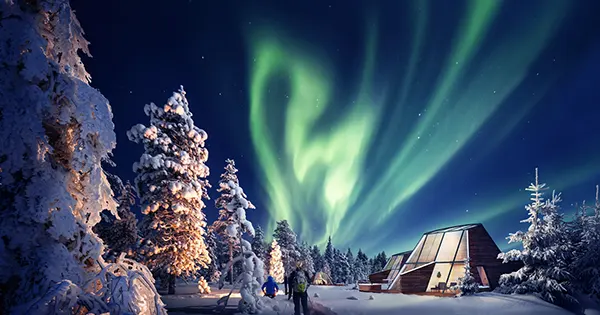
The development of glass-roofed cabins and designated viewing shelters has become more widespread across Lapland since 2020. Structures in Levi, Luosto and Kilpisjärvi are built to retain warmth, reduce condensation and allow clear viewing angles even at −30°C. Their purpose is not entertainment but comfort and clarity, providing a realistic and accessible way to observe natural atmospheric activity.
Practical Guidance for Aurora Observation
Aurora visibility depends strongly on cloud cover and local weather conditions. Inland locations with low humidity usually provide the most stable observation windows. This is why areas north of Sodankylä are known for higher clarity compared with coastal regions. Local guides regularly monitor data from the Finnish Meteorological Institute, allowing them to adjust routes without unnecessary delays.
Proper winter equipment is essential for staying outside for extended periods. Insulated boots, layered clothing and hand warmers are widely recommended by Finnish authorities for night excursions. Many observation points maintain heated shelters, yet outdoor exposure is still a significant part of the activity, so preparation is treated as a necessary step rather than an optional recommendation.
Another factor is transport reliability. Winter roads in Lapland are kept in good condition even in heavy snow, but distances between towns can be considerable. Visitors commonly rely on regulated transfer providers, which operate in accordance with official safety rules. This infrastructure ensures that aurora activities remain predictable and reasonably comfortable.
Gaming Venues Across Lapland in 2025
Finland’s gaming sector operates under a strict regulatory model controlled by the national monopoly system. In Lapland, physical gaming venues are located mainly within hotel complexes, travel hubs and licensed entertainment areas. These venues focus on monitored slot machines and regulated table games managed under transparent reporting standards. Their presence is modest compared with larger European destinations, but they remain a stable component of regional leisure.
Rovaniemi, as the regional capital, maintains the highest concentration of licensed gaming halls. These premises operate with clear age verification measures, surveillance systems and responsible play guidelines enforced at the national level. Similar small-scale facilities can be found in Levi and Saariselkä, primarily oriented towards visitors staying in winter resorts. Their activities follow consistent national rules updated continuously through official channels.
In 2025, discussions on reforming Finland’s gaming model continue, yet the current structure remains in full force. This means that the number of physical venues stays controlled, ensuring predictable operation standards. Lapland’s establishments focus on offering regulated leisure rather than expanding in size or variety. Their operation follows the country’s general approach: modest scale, clear rules and continuous supervision.
The Experience of Gaming in Arctic Locations
Gaming halls in Lapland offer controlled environments where temperature, lighting and security are adjusted to winter conditions. Staff are trained to handle typical winter travel issues, including late arrivals caused by snow or transport delays. Their role is primarily service-oriented, ensuring that guests have a clear understanding of regulations and available options.
Because Lapland’s gaming venues operate in remote areas, reliability is emphasised. Machines undergo regular checks, and maintenance schedules are adapted to account for extreme cold, especially where equipment is placed near building entrances. This reflects the broader Finnish focus on practical organisation, even in entertainment sectors.
Visitors often combine gaming with other winter activities, including sauna evenings, dining or aurora excursions. Venues are usually part of a broader service cluster, allowing guests to structure their time efficiently. This integrated approach contributes to predictable and consistent tourism services across the region.