
Bruges (Belgium): Canals, Museums and Quiet Courtyards Beyond the Postcard Views
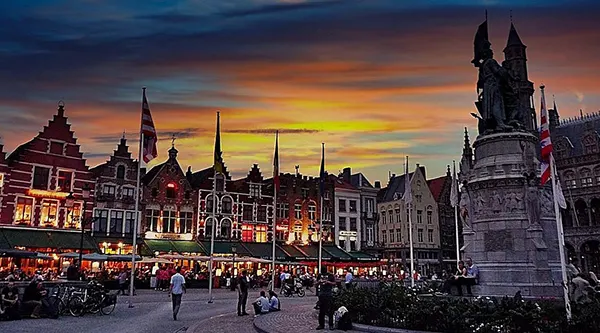
Bruges is often reduced to a handful of iconic images: the Belfry rising above Markt Square, swans gliding along the Groenerei canal, and horse-drawn carriages passing medieval façades. Yet the true character of the city reveals itself away from the busiest corners. In 2026, Bruges remains one of Europe’s best-preserved historic centres, protected as a UNESCO World Heritage Site since 2000, but its quieter lanes, small museums and enclosed almshouse courtyards offer a far more nuanced experience than the standard day-trip route suggests.
The Canals Beyond Rozenhoedkaai
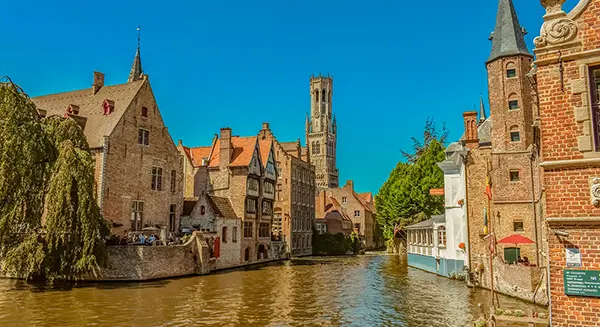
Most visitors gather at Rozenhoedkaai for the classic canal photograph. However, walking a few minutes south towards the Coupure or east along the Sint-Annarei reveals a calmer rhythm. These stretches are lined with brick townhouses, modest gardens and occasional private moorings, giving a clearer sense of how water shaped Bruges as a trading hub from the 12th to the 15th centuries.
The Groenerei remains picturesque, but early mornings or late afternoons provide a more authentic atmosphere. In 2026, canal boat tours still operate regularly from March to November, yet exploring on foot allows closer observation of architectural details: stepped gables, stone bridges and warehouse doors that once opened directly onto loading platforms.
Another overlooked stretch is the Langerei and Potterierei area, north of the city centre. Here, the canals widen slightly and the crowds thin out. The nearby St Anna district feels residential rather than touristic, with local cafés and parish churches that reflect daily Flemish life rather than curated spectacle.
Understanding Bruges as a Medieval Port
Bruges’ prosperity in the Middle Ages depended on its connection to the North Sea via the Zwin estuary. Although silting gradually reduced direct access by the 16th century, the canal network inside the city remained vital for internal trade. Grain, textiles and spices once travelled along the same waterways that now carry sightseeing boats.
The Beguinage (Begijnhof), founded in 1245, stands close to the canals yet feels removed from commercial bustle. Its whitewashed houses around a tranquil lawn reflect a semi-monastic community of lay women who lived and worked independently. The site remains active today, inhabited by Benedictine nuns, and represents continuity rather than reconstruction.
For travellers interested in infrastructure rather than scenery, the old city gates such as Kruispoort and Gentpoort provide context. These 14th-century structures controlled both land and water access, illustrating how Bruges balanced openness to trade with defensive necessity.
Museums That Go Beyond the Obvious
The Groeningemuseum is rightly known for Flemish Primitives such as Jan van Eyck and Hans Memling, yet Bruges’ museum landscape in 2026 is broader and more specialised. The Sint-Janshospitaal, one of Europe’s oldest surviving hospital buildings (founded in the 12th century), combines art with medical history, displaying instruments, archives and works by Memling created for the institution.
For a deeper understanding of the city’s mercantile wealth, the Historium provides a multimedia reconstruction of medieval Bruges. While partially immersive in format, it is grounded in documented trade networks that linked Bruges to Venice, London and the Hanseatic League.
Quieter still is the Guido Gezelle Museum, dedicated to the 19th-century Flemish poet and linguist. Located in a modest house with a garden, it offers insight into regional identity and language revival movements that shaped Belgian cultural debates long after Bruges’ commercial golden age had ended.
Religious Art and Local Craftsmanship
The Church of Our Lady houses Michelangelo’s Madonna and Child, one of the few sculptures by the artist to leave Italy during his lifetime. Beyond this highlight, the church contains elaborate tombs of Mary of Burgundy and Charles the Bold, linking Bruges to Burgundian political power.
The Lace Centre (Kantcentrum) sheds light on a craft historically associated with Bruges. Rather than treating lace as a souvenir, the exhibition explains techniques, regional patterns and the economic role of female artisans in the 17th and 18th centuries.
Smaller galleries, often overlooked, display contemporary Belgian artists. These spaces demonstrate that Bruges is not frozen in the Middle Ages; it remains part of a living cultural landscape shaped by current debates about heritage, conservation and modern use of historic buildings.
Hidden Courtyards and Almshouses
One of Bruges’ most distinctive features lies behind unassuming gates: almshouse courtyards (godshuizen). Built from the 14th century onwards by wealthy citizens, these enclosed housing complexes provided shelter for elderly or impoverished residents. Many still function as social housing today.
The De Pelikaan and De Meulenaere almshouses are particularly atmospheric. Entering through a narrow passage, visitors find small brick houses arranged around a shared courtyard with a well or modest garden. Silence is part of the experience; these are residential spaces, not open-air museums.
The St John’s and St George’s almshouses near the Potterierei canal illustrate how philanthropy and faith were intertwined. Inscriptions and small chapels within the courtyards reflect donors’ intentions to combine charity with spiritual merit.
Practical Advice for a Thoughtful Visit in 2026
Bruges has introduced visitor management measures to balance tourism and residential life. While no general entry fee applies to the historic centre, certain museums require timed tickets, especially during peak spring and summer months. Booking in advance is advisable.
Staying overnight rather than arriving on a day trip changes the rhythm entirely. Early mornings reveal near-empty streets, and evenings allow for unhurried walks along the canals once tour buses have departed. Accommodation ranges from restored townhouses to small family-run guesthouses within the old walls.
Respect for residents is essential when entering almshouse courtyards or quiet districts. Keeping noise low and avoiding intrusive photography helps preserve the delicate balance between heritage tourism and local life. Bruges rewards patience and attentiveness far more than hurried sightseeing.