
Salina Turda in Romania: An Underground Tourist City in the Transylvanian Salt Mine
Salina Turda is one of Romania’s most distinctive destinations, known for its vast underground chambers, preserved mining heritage and modern recreational zone. Located in the region of Transylvania, it operates as both a historical monument and a fully functioning visitor complex where geology, architecture and cultural value coexist. The mine has been open to the public since the early 1990s, and by 2025 it stands among Europe’s most visited subterranean attractions.
The History and Development of the Salina Turda Mine
The origins of Salina Turda date back to Roman times, when the area was valued for its natural salt reserves. Over the centuries the mine developed into an essential regional resource, supplying salt to central and eastern Europe. Its mining activity continued through the Middle Ages and into the twentieth century, gradually shaping the large galleries and shafts still visible today.
Although industrial extraction ended in 1932, the mine remained structurally intact. During the Second World War the galleries were used as an air-raid shelter, and in the decades that followed, local authorities preserved the site due to its geological and cultural significance. From 2008 to 2010 Salina Turda underwent a major modernisation project financed through European regional development funds.
In its current form, Salina Turda operates as a museum and recreational zone, combining traditional mining structures with carefully designed walkways, lighting systems and educational panels. Its redevelopment respected the original architecture, allowing visitors to observe centuries-old mining technology alongside contemporary engineering solutions.
Architectural and Geological Features of the Mine
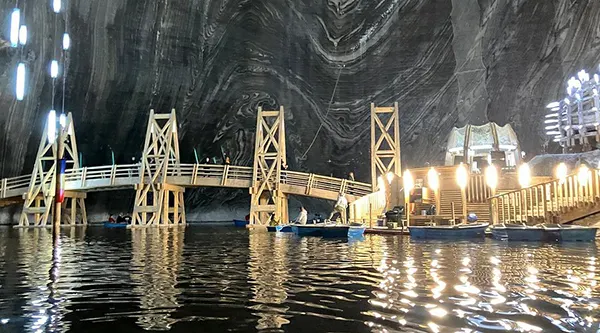
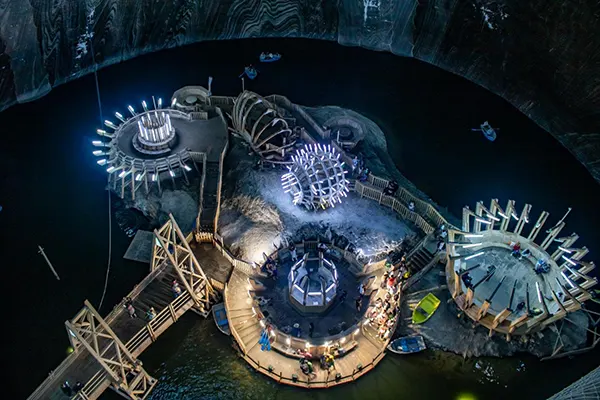
The underground complex consists of multiple chambers, each with distinct shapes and purposes. The Rudolf Mine, with a height of over 40 metres, features large wooden galleries and an amphitheatre used for cultural events. The Theresa Mine is among the oldest sections, showcasing natural salt formations and layers that developed over millions of years.
Visitors can also explore the Joseph Mine, where the narrow shaft demonstrates historic cutting techniques and the precision required to work with solid salt. Modern installations highlight the structural differences of each chamber, making it possible to observe geological stratification from various levels.
The combination of historical engineering and natural formations attracts researchers as well as tourists. Its microclimate – rich in aerosolised salt particles – has long been noted for its stable humidity and air composition, which contributes to the unique environment inside the mine.
Tourist Infrastructure and Modern Facilities
The redevelopment transformed Salina Turda into a multifunctional complex, offering visitors a range of activities within the underground setting. A subterranean lake with wooden rowing boats is located in the Theresa Mine, providing one of the most recognisable experiences of the site. An underground Ferris wheel, designed specifically for the mine’s conditions, allows panoramic views of the chamber.
Other facilities include sports courts, a mini-golf area and dedicated spaces for relaxation. These installations were built to avoid damaging the historical structure, ensuring the mine’s heritage remains the focal point. Educational exhibits describe extraction methods, miner’s equipment and the evolution of salt trade in Transylvania.
Accessibility has been significantly upgraded. Modern lifts operate alongside the original staircase systems, making it possible for people of different mobility levels to reach the main chambers. Visitor numbers continue to grow steadily, with annual attendance exceeding half a million by 2025.
Health, Safety and Environmental Conditions
The microclimate inside Salina Turda has been monitored continuously for decades. Due to the high concentration of natural salt aerosols, the environment is often considered beneficial for people with certain respiratory sensitivities. However, the facilities are managed strictly as a tourist attraction rather than a therapeutic centre, and health recommendations are based on scientific monitoring rather than promotional claims.
Safety regulations follow Romanian and European standards for underground tourist sites. Regular structural checks, ventilation analyses and lighting inspections help ensure that visitor pathways remain stable and clearly marked. Emergency protocols and trained staff are present throughout the complex.
Environmental preservation remains central to site management. The redevelopment focused on maintaining stable humidity levels, preventing structural erosion and protecting salt formations from unnecessary human impact. Waste management guidelines and controlled visitor flow also contribute to the long-term conservation of the mine.
Visiting Salina Turda: Practical Information for 2025
Salina Turda is located near the city of Cluj-Napoca, approximately 35 kilometres away, making it accessible by road and public transport. The site operates year-round, though opening times may vary seasonally. Visitors are encouraged to check updated schedules and ticket prices through official sources before planning a visit.
The temperature inside the mine remains stable, usually between 10°C and 12°C, so appropriate clothing is recommended even during warmer months. Comfortable footwear is essential, as visitors may need to walk considerable distances across different chambers and levels.
The surrounding region of Turda also offers attractions such as the Turda Gorge nature reserve, local museums and traditional Transylvanian cuisine. Many travellers combine a visit to the salt mine with a wider exploration of the area, making it part of a multi-day itinerary.
How to Make the Most of Your Trip
To gain a deeper understanding of Salina Turda, guided tours are available in multiple languages. These tours provide insight into both the historical mining processes and the engineering challenges of converting the mine into a modern visitor complex. They also help travellers navigate the extensive underground routes efficiently.
Photography is permitted in most areas, although some chambers have low lighting and may require careful adjustment. The panoramic platforms offer the best vantage points for capturing the scale of the underground structures.
For those interested in local culture, Turda hosts regular events and exhibitions that highlight regional history, craft traditions and contemporary arts. Many visitors choose to explore the town before or after entering the mine, making Salina Turda part of a broader cultural experience.